Discover the Key Advantages of Hiring Professional Cleanup Services for Your Construction Project
Post-construction cleanup is the targeted process of removing construction debris, fine particulates, residues, and hazards so a site becomes safe, functional, and appearance-ready for handover. This article explains why hiring professional cleanup services outperforms DIY approaches by improving safety, shortening timelines, protecting finishes, and restoring indoor air quality after renovation or new builds. Readers will learn how professional crews manage regulatory disposal, use specialized equipment such as HEPA vacuums and air scrubbers, and apply eco-friendly practices that reduce long-term maintenance costs. The guide walks through the main benefits, quality and aesthetic gains, a cost-effectiveness comparison (including hidden DIY costs), the specialized equipment and techniques professionals deploy, and how health and environmental concerns are addressed. Finally, practical guidance covers what to look for when engaging a veteran-led local provider and how that orientation can support reliability and accountability for construction cleanup projects. Throughout, this article integrates semantic concepts like construction dust removal, OSHA-aligned safety, and post-construction cleanup cost to help you make informed decisions for commercial or residential projects.
What Are the Main Benefits of Professional Construction Cleanup Services?
Professional construction cleanup services deliver a combination of safety, efficiency, finish quality, cost savings, and health protection that DIY cleaning rarely matches. By definition, these services focus on removing construction debris, managing hazardous residues, and preparing spaces for occupancy using trained crews and specialized workflows that minimize rework and protect installed materials. The mechanism that creates value is procedural rigor—trained teams follow sequences (bulk removal → containment → detailed cleaning → final walkthrough) and apply the right cleaning chemistry and tools for each surface. The result is a site that meets handover standards faster, preserves finishes, and reduces downstream maintenance. The following list summarizes the primary advantages and their direct impacts.
Professional post-construction cleanup provides clear benefits:
- Improved Safety: Removes nails, glass, and chemical residues to reduce on-site injury risk.
- Faster Turnover: Experienced crews and task sequencing reduce downtime before occupancy.
- Higher Finish Quality: Detail cleaning, surface-appropriate methods, and final touch-ups protect installed materials.
- Lower Long-Term Costs: Proper removal of fine dust prevents HVAC and finish damage that leads to repairs.
- Better Indoor Air Quality (IAQ): HEPA filtration and thorough dust removal reduce airborne particulates for occupant health.
These advantages connect directly to specific safety protocols and efficiency strategies; understanding safety measures clarifies how crews lower risk before moving on to accelerated cleanup workflows.
How Do Professional Services Ensure Construction Site Safety?

Construction-site safety in cleanup begins with hazard identification and a controlled, procedural approach to removal. Professionals conduct a quick site risk assessment to identify sharp debris, trip hazards, chemical containers, and dust hotspots before starting bulk removal, and they stage containment where needed to prevent spread. Workers use personal protective equipment and follow safe lifting and material-handling practices while adhering to disposal regulations for hazardous or regulated wastes, reducing the risk of fines and environmental harm. Training and documented procedures ensure consistency: crews execute checklists during each phase to verify that hazards are removed and that the space is safe for subsequent trades or occupants. Understanding these safety-first steps leads naturally to how those teams also accelerate completion and save project time through optimized workflows.
In What Ways Do Experts Improve Efficiency and Save Time on Cleanup?
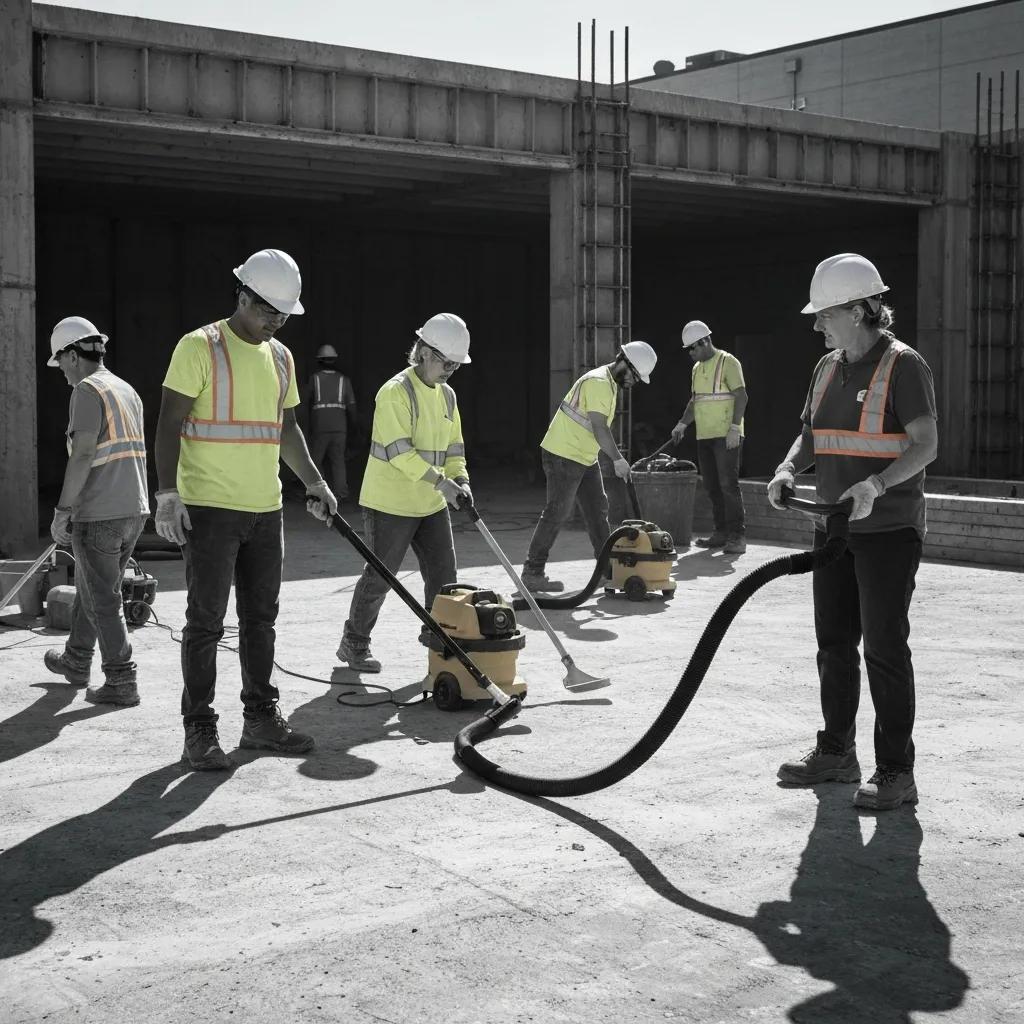
Experts improve efficiency through crew specialization, sequential workflows, and use of purpose-built equipment that accelerates repetitive tasks. A typical professional sequence starts with bulk debris removal, followed by coarse cleaning, then fine particulate removal with HEPA vacuums and tack wiping, and finishes with detail work and a final walkthrough, which prevents rework and eliminates redundant passes. Crews are often 2–6 people whose roles are choreographed to parallelize tasks—while one team removes debris another preps surfaces for final cleaning—cutting total cleanup hours compared with ad-hoc DIY efforts. Time saved on cleanup shortens the overall project schedule, enabling earlier inspections and occupancy; this efficiency translates into quantifiable savings when measured against lost rental days, delayed openings, or postponed handovers.
How Does Professional Cleanup Enhance Quality and Aesthetic Appeal of Your Construction Project?
Professional cleanup enhances perceived and measurable quality by removing surface residues, protecting sensitive materials, and applying finish-appropriate cleaning to deliver a turnkey look. Definitionally, the focus is not only on debris removal but on preserving and restoring finishes—dust-free glass, streak-free fixtures, and scratch-free floors—which improves first impressions for owners, tenants, and inspectors. The mechanism is material-sensitive cleaning: technicians select agents and tools based on substrate tolerance (e.g., pH-neutral cleaners for hardwood, non-abrasive methods for painted surfaces) and use targeted techniques like tack-cloth wiping and grout detailing. The result is a space that looks professionally completed and reduces buyer or tenant objections during walkthroughs. Below is a concise process checklist for the detailed finish work professionals perform.
A typical final-finish checklist includes:
- Surface protection removal and inspection: Remove temporary covers and inspect for damage.
- Fine dust removal: HEPA vacuuming, tack wiping, and microfiber dusting for all horizontal and vertical surfaces.
- Fixture and glazing detailing: Streak-free glass, polished hardware, and sanitary cleaning of plumbing fixtures.
- Floor and grout finishing: Proper cleaning agents and buffing to reveal final appearance.
This finish-oriented approach protects installed materials and sets the stage for how detail-oriented techniques produce long-term value and better marketability.
What Detail-Oriented Techniques Do Professionals Use for a Pristine Finish?
Detail-oriented techniques include sequential cleaning from top to bottom, use of tack cloths to remove ultrafine dust, and surface-appropriate chemical selection to avoid etching or discoloration. Professionals typically begin with high-level dusting of overheads and lighting, followed by vertical surface cleaning—walls, trim, cabinetry—and finish with floors to prevent recontamination. For glass and glazing, ammonia-free solutions and lint-free towels prevent streaking, while grout and tile receive targeted agitation and neutralizers to restore grout lines without damaging sealants. These techniques combine mechanical action and chemical selection to protect finishes and ensure a consistent, showroom-ready result; mastery of these methods also reduces the chance of post-handover complaints and rework.
How Does Expert Cleanup Impact Property Value and First Impressions?
A professionally cleaned construction site directly influences perceived property value and accelerates successful handovers during inspections and buyer walkthroughs. Clean, finished spaces read as well-executed projects; prospective buyers and tenants often equate cleanliness with workmanship quality, which can translate into higher offers, faster leases, or smoother certificate-of-occupancy processes. The mechanism here is perception: removing dust film from surfaces and ensuring fixtures shine signals attention to detail, which reduces objections during negotiations. In practice, developers and property managers report fewer post-closing punch-list items when a thorough final clean precedes the walkthrough, which in turn reduces follow-up costs and protects reputation.
Why Is Hiring Professional Cleanup More Cost-Effective Than DIY Construction Cleaning?

Hiring professionals is often more cost-effective because it accounts for direct cleanup costs and the hidden expenses that DIY efforts typically overlook. Definitionally, cost-effectiveness here compares total project costs: labor, tools, disposal, rework, fines, and lost time versus the fee paid to a professional service that bundles trained labor, equipment, and regulatory-compliant disposal. Professionals reduce hidden costs by preventing finish damage, avoiding improper disposal fees, and shortening occupancy delay—mechanisms that create savings in both immediate and downstream budgets. The table below compares DIY and professional approaches across key cost components to highlight typical differences and the ROI potential of hiring experts.
| Cost Component | DIY Characteristic | Professional Service Value |
|---|---|---|
| Labor & Time | Often unpaid owner/crew hours; slower completion | Trained crews complete tasks faster, reducing project days |
| Equipment | Rental/purchase costs for HEPA vacs, scrubbers | Included access to industrial-grade HEPA vacs and scrubbers |
| Disposal & Compliance | Risk of incorrect disposal and fines | Proper segregation and compliant disposal reduce regulatory risk |
| Rework/Repair | Higher risk of damaging finishes and needing repairs | Correct methods protect finishes, avoiding repair costs |
| Indirect Costs | Delayed occupancy, lost revenue | Faster turnover and fewer punch-list items save money |
This comparison shows that when indirect and long-term costs are considered, professional cleanup frequently delivers a lower total cost of ownership and better ROI. Understanding these hidden DIY costs helps explain why hiring a pro can be a financially sound decision; for many projects, the next practical question is how DIY pitfalls translate into specific repair and maintenance expenses.
What Hidden Costs Are Associated with DIY Construction Cleanup?
Hidden DIY costs include extended labor hours, improper tool use leading to finishes damage, incorrect disposal of hazardous materials resulting in fines, and HVAC or system contamination that increases maintenance bills. Homeowners or contractors performing cleanup without HEPA filtration may leave residual drywall dust that infiltrates HVAC systems, accelerating filter replacement and potentially requiring duct cleaning—expenses often overlooked when tallying DIY savings. Time lost to cleanup can also delay lease starts or occupancy, which has measurable revenue impacts for commercial projects. Additionally, inexperienced cleaning can scratch floors or strip sealants, producing repair or replacement costs that exceed what a professional cleanup fee would have been.
How Does Professional Cleanup Prevent Long-Term Maintenance Expenses?
Professional cleanup prevents chronic issues by removing fine particulates that abrade finishes and clog mechanical systems, applying correct cleaning chemistries that protect coatings, and executing containment strategies that stop cross-contamination. For example, removing drywall dust with HEPA-grade equipment reduces abrasive wear on flooring and prevents dust from settling into HVAC coils, which prolongs system life and reduces filtration replacement frequency. Correct restoration of grout and sealants protects waterproofing and reduces the likelihood of moisture-related maintenance. These preventative actions convert into quantifiable savings over years of building operation and lower total lifecycle maintenance costs.
For projects seeking a veteran-led local provider example, Veterans Cleaning Solutions emphasizes disciplined workflows and accountability that can reduce uncertainty in cost estimates. Their model focuses on predictable staging, scheduled crew deployment, and clear scopes that help clients compare quotes against potential DIY hidden costs. If you want a quote or consultation that outlines cost components and projected ROI for your specific cleanup needs, reach out through the company’s public business listing to request a project estimate.
What Specialized Equipment and Techniques Do Professional Cleanup Services Use?
Professional post-construction cleanup relies on specialized equipment and sequenced techniques to remove bulk debris and microscopic dust while preserving finishes. By definition, these tools range from HEPA-filtered vacuums that capture ultrafine particulates to air scrubbers that reduce airborne particulate load during active cleaning. The mechanism is coordinated equipment use: bulk removal with debris hauling and scrapers, followed by HEPA vacuuming and air scrubbing to clear suspended dust before final detail cleaning, which prevents recontamination of surfaces. The combined effect is thorough particulate removal that protects occupants and mechanical systems. The following table maps key equipment to their attributes and primary benefits.
| Tool | Attribute | Use-Case / Benefit |
|---|---|---|
| HEPA Vacuum | High-efficiency particulate capture | Removes fine drywall dust and allergens from surfaces and crevices |
| Air Scrubber | Continuous air filtration during cleaning | Lowers airborne particle count and protects HVAC intake |
| Pressure Washer | High-pressure liquid cleaning | Removes concrete residue and heavy exterior grime safely |
| Floor Scrubber/Burnisher | Mechanical cleaning and polishing | Restores floor finish and removes embedded debris |
This equipment mix supports efficient, safe cleaning across substrates and reduces the chance that cleanup activities will damage finishes. After understanding the core toolset, consider how filtration devices in particular protect indoor air during active cleaning.
How Do HEPA Vacuums and Air Scrubbers Improve Post-Construction Cleaning?
HEPA vacuums and air scrubbers improve results by capturing particles as small as PM2.5 and preventing redistribution of dust during cleaning operations. HEPA filtration mechanically traps fine drywall dust, sanding residues, and allergenic particles that ordinary vacuums would recirculate, helping to maintain cleaner surfaces and reducing stress on HVAC filters. Air scrubbers create negative-pressure zones or provide continuous air turnover in enclosed areas to lower airborne particulate concentrations during active work. Together, these devices restore indoor air quality more quickly, protect building systems, and reduce the risk that occupants will experience irritation or health complaints after turnover.
What Other Industrial Tools Ensure Thorough Construction Debris Removal?
Other industrial tools include pressure washers for exterior concrete and masonry, floor scrubbers and burnishers for restoring finished surfaces, industrial wet/dry vacs for water intrusion cleanup, and scaffolding-safe vacuums for overhead dust removal. Use-cases vary: pressure washers break down cement and mortar residue, floor scrubbers clean tile and resilient floors efficiently, and scaffolding-safe vacuums enable technicians to extract dust from high areas without spreading it. Safety measures accompany each tool—containment, correct chemical selection, and PPE—ensuring equipment speed does not compromise finish integrity. Choosing the right combination of machines and methods reduces labor hours and prevents damage that could lead to additional repair expenditures.
How Do Professional Cleanup Services Address Health and Environmental Concerns?
Professional cleanup services address health and environmental concerns by removing particulates that harm indoor air quality, selecting low-VOC and biodegradable cleaning agents, and following regulated waste disposal practices. Defined activities include source removal of dust, HEPA-based filtration, and targeted HVAC cleaning where needed to stop dust recirculation. The mechanism is harmonizing immediate particulate removal with environmentally responsible product choices and waste segregation to limit chemical exposure and landfill burden. The result is safer indoor environments for occupants and lower environmental impact from cleaning operations. The table below compares conventional cleaning chemicals against eco-friendly alternatives and their relative environmental and health impacts.
| Product Category | Attribute | Environmental / Health Impact |
|---|---|---|
| Traditional Solvent Cleaners | Strong chemical action | Higher VOCs and potential respiratory irritation |
| Low-VOC Neutral Cleaners | Reduced emissions | Lower occupant exposure and safer indoor air quality |
| Microfiber Tools | Reusable physical removal | Less chemical dependence and lower waste |
| Segregated Waste Handling | Separation of hazardous streams | Reduces landfill contamination and regulatory risk |
How Does Expert Cleanup Improve Indoor Air Quality After Construction?
Expert cleanup improves indoor air quality by removing both settled and airborne particulates through source cleaning, HEPA filtration, and HVAC protection measures. Technicians remove dust from surfaces and building cavities, then apply HEPA vacuuming and air-scrubbing cycles to reduce PM2.5 and larger particulate counts before occupancy. Cleaning teams may also schedule a post-clean HVAC filter inspection and replacement if dust loads were heavy; this step prevents ongoing recirculation and helps maintain long-term IAQ. These practices reduce allergen levels, minimize irritation for sensitive occupants, and lower the risk that construction residues degrade system performance over time.
What Eco-Friendly Practices Are Used in Post-Construction Cleaning?
Eco-friendly post-construction practices include choosing biodegradable, low-VOC cleaning agents, using microfiber cloths to reduce chemical use, and implementing waste segregation to maximize recycling and responsible disposal. Microfiber captures fine dust efficiently, cutting the need for harsh solvents, while low-VOC neutral cleaners maintain surface safety without adding toxic emissions. Waste minimization strategies—sorting metal, aggregate, cardboard, and hazardous materials—reduce landfill input and demonstrate environmental stewardship. Together, these practices lower occupant chemical exposure and align cleanup work with broader sustainability objectives for modern construction projects.
What Should You Know About Hiring Veterans Cleaning Solutions for Your Construction Cleanup?
Veterans Cleaning Solutions is presented here as a local, veteran-led example of a professional cleanup provider that emphasizes disciplined processes, reliability, and clear next steps for clients seeking post-construction services. As a veteran-led company, the organization’s positioning centers on operational discipline—structured checklists, punctual crew deployment, and clear scopes of work—which can help reduce uncertainty during final cleaning phases and support predictable outcomes for project stakeholders. When evaluating any provider, ask for a written scope that lists included stages (bulk removal, HEPA stage, detail finish, waste handling) and request a project estimate that itemizes labor, equipment, and disposal to compare total costs and potential ROI. For verification and local reviews, check the company’s public business listing where customers commonly leave feedback and request a tailored quote for your specific cleanup requirements.
How Do Veteran Values Enhance Reliability and Precision in Cleanup Services?
Veteran-associated values such as discipline, adherence to procedure, and accountability can translate into predictable cleanup schedules and consistent quality control practices. These attributes often manifest as structured pre-job briefing, use of checklists during each stage, and documented final walkthroughs that reduce oversight gaps and missed punch-list items. The practical benefit is fewer surprises at handover, clearer responsibilities for remediation if needed, and a culture of timely communication. Framing these traits as procedural advantages helps clients evaluate how vendor culture may impact project timelines and reliability.
Why Choose a Local Veteran-Owned Company for Your Construction Project?
Choosing a local veteran-owned company combines the benefits of nearby responsiveness with the accountability that comes from a mission-oriented operational culture. Local providers can often respond faster to scope changes, are more familiar with regional disposal rules and inspection expectations, and may offer more direct oversight on-site. Supporting a veteran-led local business can also align with community or procurement goals for certain public or private projects. To validate a provider’s fit, request client references or publicly available reviews and a clear, itemized proposal that matches your project’s cleanup stages and regulatory requirements.
