
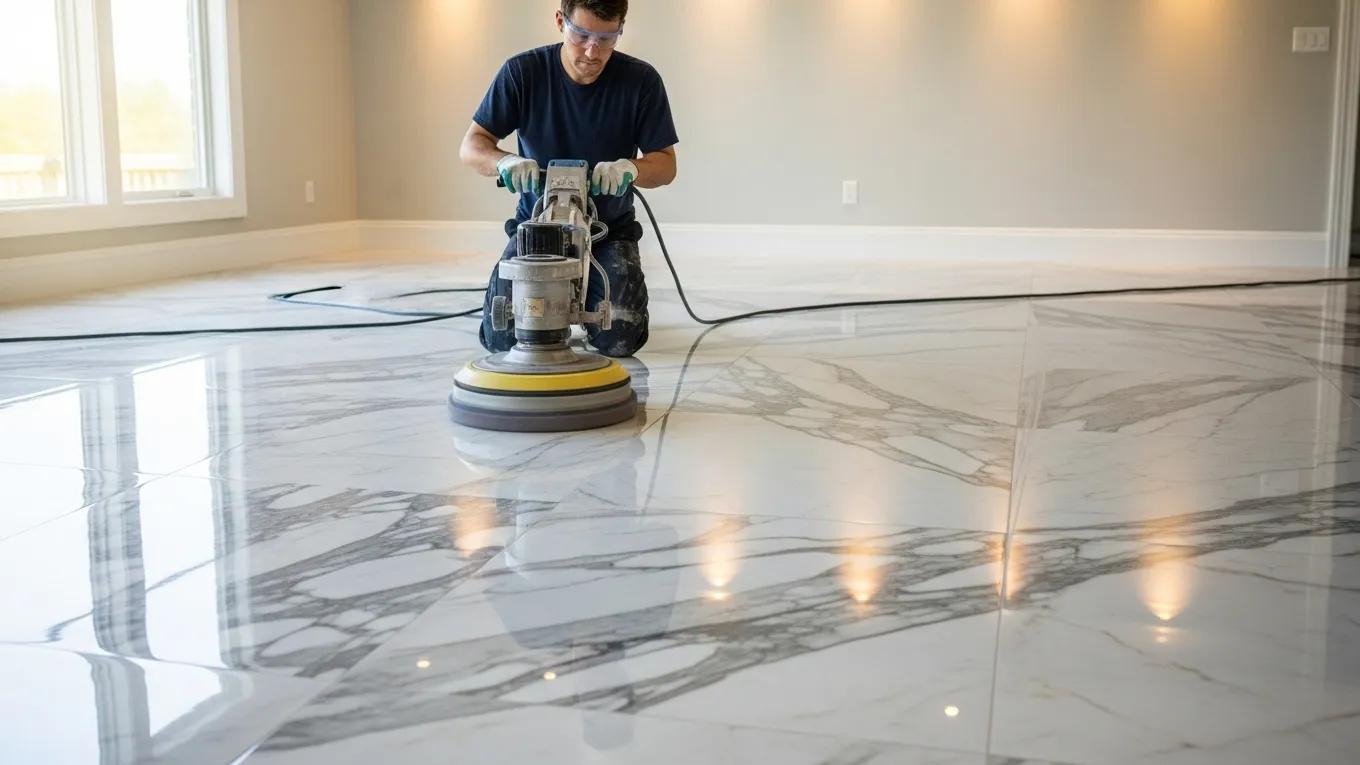
Keeping stone surfaces in homes or businesses looking great and lasting longer matters. Regular honing and polishing prevent wear, restore shine, and protect your floors. This article explains recommended schedules for different stone types, how to spot needed care, and how to set a maintenance plan to extend your natural stone’s life.
What Is the Recommended Stone Polishing Frequency for Different Stone Types?
Frequency depends on the stone; hardness and porosity affect maintenance intervals.
How Often Should Marble, Granite, and Travertine Be Honed and Polished?

Marble usually needs honing and polishing every 6–12 months because it is softer and more porous. Granite is tougher and often requires service every 1–3 years. Travertine typically benefits from annual maintenance to keep its finish consistent and vibrant.
| Stone Type | Recommended Frequency |
|---|---|
| Marble | Every 6-12 months |
| Granite | Every 1-3 years |
| Travertine | Annually |
Following these schedules helps preserve both the look and function of your stone surfaces over time.
What Are the Signs Your Stone Floor Needs Stone Honing or Polishing?

Knowing these signs lets you act before damage worsens: watch for dullness, scratches, stains, and accelerated wear in busy areas.
- Visible Scratches or Dullness: These may indicate that honing is needed to restore the surface’s luster.
- Stains or Discoloration: If your stone has lost its vibrancy, it may be time for a thorough polish.
- Environmental Factors: Heavy foot traffic and other exposures can accelerate wear, necessitating more frequent maintenance.
Check for these signs regularly to keep your stone surfaces in good condition.
Why Is Scheduling Stone Honing and Polishing at Proper Intervals Important?
Scheduling maintenance at the right intervals protects your floors and saves money by avoiding major repairs down the line.
How Does Routine Honing Extend Stone Floor Lifespan and Appearance?
Routine honing removes scratches and etching, slowing further deterioration. Studies show that regularly maintained floors last significantly longer, keeping their beauty and durability.
What Are the Risks of Infrequent or Poorly Timed Stone Maintenance?
Infrequent care allows scratches to deepen and wear to increase, often leading to intensive and costly repairs or even replacement. A balanced maintenance plan helps prevent those outcomes and protects your investment.
Research also highlights the value of optimising inspection schedules for natural stone to prevent deterioration and extend service life.
Optimizing Inspection Schedules for Natural Stone Claddings
The study shows how multi-objective optimization can be applied to plan inspection schedules within maintenance programs.
Optimization of inspection period in natural stone claddings, C Ferreira, 2020
How Can You Choose a Reliable Stone Polishing Contractor?
Choosing the right contractor affects work quality and how long your stone lasts. For exterior cleaning needs like pressure washing and gutter cleaning, see exterior cleaning.
What Credentials and Experience Should You Look for in a Stone Honing Service?
When hiring, check for:
- Licensure and Insurance: Ensure they are qualified and protected against damages.
- Experience with Specific Stone Types: Contractors should have proper experience handling the specific type of stone you have.
- Positive Reviews and References: Check for customer feedback on their previous work.
These checks confirm the contractor’s skill and reliability.
How Does Veterans Cleaning Solutions LLC Ensure Quality and Customer Education?
Veterans Cleaning Solutions LLC operates in the Wiregrass area with trained staff and advanced stone-care techniques, focusing on quality while teaching customers how to maintain stone between professional visits. Learn more about their services at Veterans Cleaning Solutions LLC.
What Are Best Practices for Scheduling and Maintaining Honed Stone Surfaces?
A clear maintenance schedule helps keep stone surfaces attractive and functional.
How to Build a Stone Floor Maintenance Schedule for Long-Term Results?
Key factors to consider:
- Assessing Wear Factors: Evaluate how often the stone surface is used and exposed to potential wear.
- Setting Intervals Based on Usage Levels: More frequently used areas may require more regular maintenance compared to lesser-used spaces.
- Professional Consultation: Engage with professionals like Veterans Cleaning Solutions LLC to tailor a maintenance plan suited to your specific needs.
Stick to a well-structured schedule to get better results and extend the life of your stone floors.
Can You Polish Stone Floors Yourself or Should You Hire Professionals?
DIY polishing is possible but often lacks professional tools and technique. If you try it, be sure you have the right equipment and knowledge.
- Cost Consideration: Weigh the potential costs of purchasing equipment versus hiring a professional.
- Skill Requirements: The technical process of honing and polishing requires experience to achieve desired results without damaging the floor.
- Risk Factors: Improper techniques can lead to irreversible surface damage.
Hiring professionals like Veterans Cleaning Solutions LLC usually delivers a more complete and reliable polishing result.
Frequently Asked Questions
1. What are the benefits of regular stone honing and polishing?
Regular honing and polishing restore shine, remove scratches, and protect the stone from wear. This preserves appearance, prevents costly repairs, and extends the life of your floors.
2. How can environmental factors impact the maintenance frequency of stone surfaces?
Humidity, foot traffic, and exposure to the elements affect how often stone needs care. High-traffic or moisture-prone areas will need maintenance more often than low-traffic, dry zones.
3. What tools are required for DIY stone honing and polishing?
For DIY work you will need diamond polishing pads, a wet/dry vacuum, and a quality floor buffer. Also use a proper stone cleaner and a good sealant. Learn the right techniques for your stone type to avoid damage.
4. Are there specific cleaning products recommended for stone surfaces?
Use pH-neutral cleaners made for natural stone. Avoid acidic, harsh, or abrasive products. Sealants can help protect against stains and moisture, keeping stone vibrant longer.
5. How do I know if a stone care service is reputable?
Look for licensure and insurance, read client reviews, and ask for a clear service outline. A company that educates customers about maintenance is often more reliable.
6. What maintenance practices prolong the life of stone floors?
Keep a regular cleaning and polishing routine, use mats or coasters in high-traffic spots, seal periodically, and clean gently with appropriate products to avoid damage.
7. How much does professional stone polishing typically cost?
Costs vary by stone type, area size, and service level. Expect roughly $2–$5 per square foot. Get multiple, itemised quotes to compare offerings. Professional service often yields better results than DIY.
Conclusion
Regular honing and polishing keep your stone looking its best and extend its lifespan. Follow recommended schedules, watch for wear, and partner with trusted professionals to protect your investment. Discover how Veterans Cleaning Solutions LLC can help with your stone-care needs.
